
at is Female Pattern Baldness?
Female pattern baldness, also known as androgenic alopecia, is hair loss affecting women. Similar to male pattern baldness, it’s when a woman experiences unexpected, heavy loss of hair as it takes longer for new hair to begin growing. The only difference is that women lose their hair in a different pattern than men.
Yes, balding isn’t just a characteristic of ageing men as much as you’d like to believe! In fact, it’s estimated that 50% of women will experience noticeable hair loss.
How Much Hair Loss is Normal?
But you might be wondering what’s the norm. Generally, humans shed an average of 50 to 100 single hairs daily and this is perfectly normal! To reassure you, the average human head has about 100,000 hairs with a similar number of hair follicles.
The only time you need to worry is when you begin to lose more than 100 strands of hair per day or 700 strands per week. These numbers are just a rough estimate and it ultimately varies from person to person.
Hair loss in women is more common than you think
Female pattern hair loss is actually a normal occurrence, and this is especially so once you age (i.e. 40s onwards). It’s experienced by about one-third of women at some point in their lives and two-thirds of women after menopause.
Although anyone can be affected by hair loss, it’s usually more common in women:
- Older than 40
- Who just gave birth
- Who have undergone chemotherapy and/or are affected by other medications
- Women who often have hairstyles that pull on the hair (e.g. tight ponytails or tight braids) and/or use harsh chemicals on their hair
- Menopausal women
Fortunately, female pattern baldness is treatable
Female pattern baldness is treatable but it can’t be reversed! That’s why it’s important to begin proper treatment as early as possible to stop the hair loss and potentially be able to regrow some of the hair you’ve lost.
Treatments can take up to 12 months to start working and you’ll have to stay on them long-term to avoid losing hair again.
What Does Female Pattern Baldness Actually Look Like?
It’s important to keep a close eye on some of the early signs of hair loss because the earlier you’re aware, the more effective the treatment! It’s much easier to preserve the hair you already have than to regrow hair that’s been lost.
Early signs of hair loss:
- Seeing more hair falling out daily on your brush, on the floor, in the shower, on your pillows or in the sink
- Noticeable patches of thinner or missing hair, including a widening area on the top of your head
- Seeing scalp skin through your hair
- Having smaller ponytails
- Seeing hair break off
Male vs female pattern hair loss
Wondering what it’s like for a woman to lose hair compared to men? We get it, the imagery of a balding man is probably much easier to conjure in your mind.
Well, in men, hair loss starts at the front of the head before receding to the back until they go bald. For women, however, you’ll lose hair from all over your head, starting at the part line. Hair at the temples may also recede.
The good news is women are less likely to become completely bald although their hair may start thinning drastically.
Ludwig Scale: Stages of female pattern hair loss
To help you better understand female pattern hair loss, check out the Ludwig Scale!
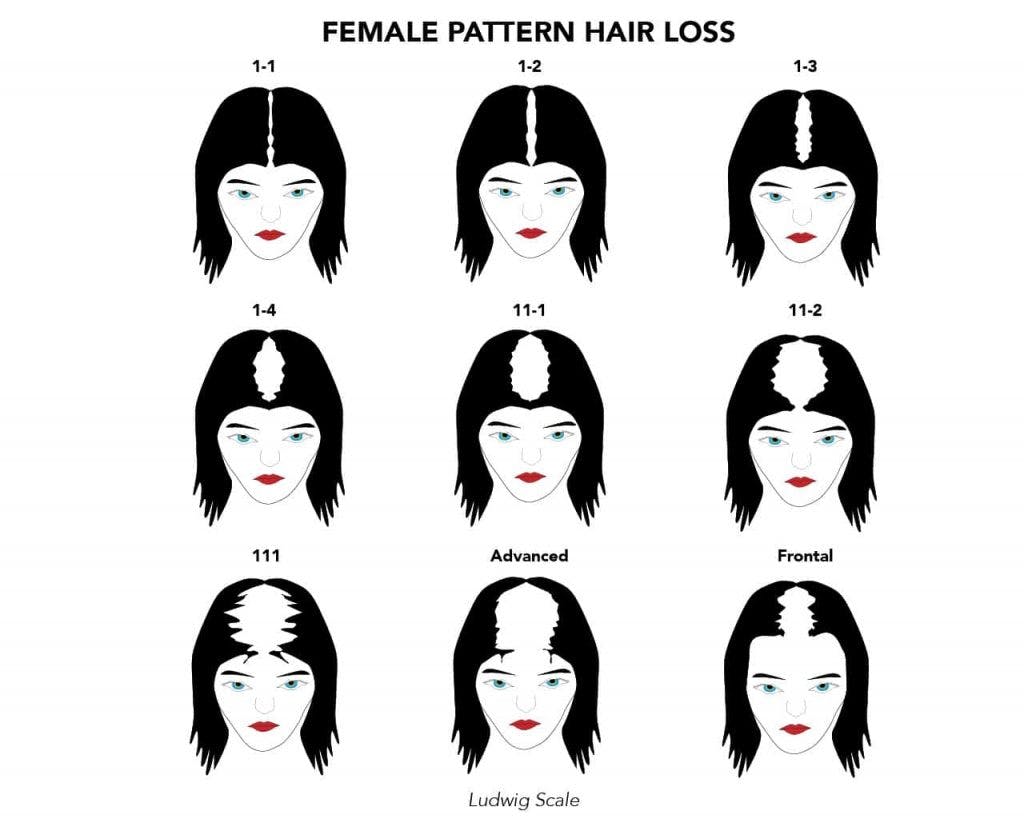
It effectively categorises female pattern baldness into three different stages (according to severity). This allows you to understand the degree of your hair loss, the potential for additional hair loss in the future and lastly, the best course of treatment for you.
Image credit: The Treatment Rooms London
Type I: Mild
- Frontal hairline remains relatively unaffected although hair loss may occur on the top and front of the scalp
Type II: Moderate
- May experience thinning, shedding, general decrease in hair volume and a widening centre parting
Type III: Most extreme
- Hair becomes so thin you’ll have difficulty camouflaging your scalp
Causes of Hair Loss in Females
Hair loss can happen at any age for a variety of reasons.
1. Family history/Genes | - Hereditary condition that happens with ageing |
2. Hormonal changes | There are a variety of conditions that can cause permanent or temporary hair loss, such as pregnancy, childbirth, menopause and thyroid problems. |
3. Medications and Supplements | Hair loss can also be a side effect of certain drugs (e.g. used for cancer, arthritis, depression, heart problems, and high blood pressure). |
4. Stress | - Physical or emotional shock or trauma can also lead to the general thinning of your hair temporarily |
5. Hairstyles and Treatments | - Excessive hairstyling or hairstyles that pull your hair tight (e.g. cornrows and pigtails) can cause a type of hair loss called traction alopecia |
6. Rapid weight loss | - Experienced by those who engage in restrictive and unhealthy diets to lose weight quickly |
7. Iron Deficiency | - Low iron levels may indicate you’re anaemic which causes you to lose hair |
Treatment and Hair Care
When it comes to treating your hair loss, early diagnosis is encouraged in order to potentially minimise future hair loss. Here are some ways to effectively treat female hair loss:
- Minoxidil The only topical medication approved by the U.S. Food and Drug Administration (FDA) to treat female pattern hair loss Actively promotes hair growth by shedding old hairs and replacing them with new, stronger ones Available in 2%, 3% and 5%
- Spironolactone Oral medication prescribed for female pattern hair loss that’s associated with the overproduction of male sex hormones Works by slowing down the production of androgens (male sex hormones). Reduced production of androgens can slow down the progression of hair loss caused by androgenic alopecia. It can also encourage hair to regrow
- Ketoconazole Over-the-counter medicated products like Nitozol Shampoo can be used to treat dandruff, itchiness and flaking Used for the treatment and prevention of scalp and skin infection associated with the fungus Pityrosporum such as seborrheic dermatitis (a dry or greasy scaling of the scalp and other parts of the body) and dandruff (pityriasis capitis)
Lifestyle and dietary changes
For best practice, here are several things you should try to keep your hair on:
- Avoid oily hair products that clog up your hair follicles and cause inflammation
- Avoid hairstyles that pull on your hair
- Make changes to your lifestyle so that stress can be managed and minimised. Some ways to reduce stress include limiting your intake of stimulants (like nicotine and caffeine), exercising regularly and engaging in mindful meditation
- Avoid drastic lifestyle changes (e.g. weight loss) or an unbalanced diet which may result in insufficient nutrients for your hair
Hair Loss No More
If your hair is currently a cause of concern for you, you’ll be glad to know Siena can connect you to clinically proven treatments that will help with your hair loss/thinning problems.
It’s time to make hair loss a thing of the past and look forward to discovering thicker, fuller and healthier hair!
References:
- Cleveland Clinic. (2021, February 10). Hair Loss in Women. https://my.clevelandclinic.org/health/diseases/16921-hair-loss-in-women.
- Kubala, J. (2021, February 22). How Are Weight Loss and Hair Loss Related? All You Need to Know. Healthline. https://www.healthline.com/nutrition/weight-loss-and-hair-loss.
- Miami Hair Institute. (2013, February 12). Ludwig Classification: Diagnosing Female Hair Loss. https://www.miamihair.com/blog/hair-loss/ludwig-classification-diagnosing-female-hair-loss/.
- Watson, S. (2018, August 30). Female Pattern Baldness (Androgenic Alopecia): What You Should Know. Healthline. https://www.healthline.com/health/womens-health/female-pattern-baldness.